In many households, HVAC power consumption accounts for between 40% and 55% of the utility budget. However, this makes HVAC improvements one of the best targets for energy efficiency. Here is a look at how modernization, maintenance and a few key choices can save you some serious money with your home’s heating and cooling system.
Thermostat
Your home’s thermostat is arguably the easiest and most cost-effective solution for energy efficiency. Setting the heater to not kick on until the temperature dips to 66 degrees Fahrenheit is a good choice. You also can set your AC to not kick on until the temperature reaches 78 degrees.
Even better, modern smart thermostats can automate the entire process. Programmability allows you to configure the thermostat to keep you comfortable when you’re home and reduce energy consumption when you’re away. Similarly, you can set cooler nighttime temps for efficiency and more restful sleep. Some of the best smart thermostats even use geofencing to determine when you’re close to home so that they can turn up the comfort level.
High-end solutions now also offer occupancy sensors. These are systems that can determine how many people are in a specific space. If everyone has gathered in the living room to watch a movie, the HVAC system can target comfort levels there the most. Artificial intelligence (AI) systems also allow the equipment to detect when occupancy is higher than normal. If the kitchen and dining room are getting hot during a summer gathering, the HVAC can anticipate the need and provide additional cooling.
A good smart thermostat costs a few hundred dollars at most. The return on improved efficiency is usually at least 10% per year.
Reporting systems in smart thermostats offer another way to save. Many models now track dialing indoor and outdoor conditions. They can then tell you whether consumption was unusual compared to expectations. You can then get a leg up on scheduling maintenance work if the HVAC is underperforming.
Insulation
Checking your home’s insulation is another cost-effective solution. Scanning for thermal leaks allows you to quickly spot where there are problems. You can then target insulation to fill the worst spots. This helps you save heat in the winter and cool air in the summer.
While people often think of insulation as a predominantly northern problem because of the cold, it also matters in warm places. Insulating your attic prevents cooled air from your AC from interacting with hot air from your home’s roof.
R-value is the primary metric for measuring insulation. In Texas, a high R-value for the attic area is especially important. R-38 to R-49 is a good choice, averaging a depth between 12 and 15 inches. This small choice may reduce your household cooling costs by as much as 25%.
Ductwork
Inefficiency in your home’s ductwork can be surprisingly costly. Even a small leak can divert heating and cooling toward the wrong spots. Likewise, leak ducts can affect airflow, potentially preventing comfortable air from getting to target zones in your house.
Our HVAC ductwork services can also assess the efficiency of your ductwork’s design. Cutting out unnecessary runs and replacing older ductwork can improve energy efficiency and allow your HVAC system to perform better.
Maintenance
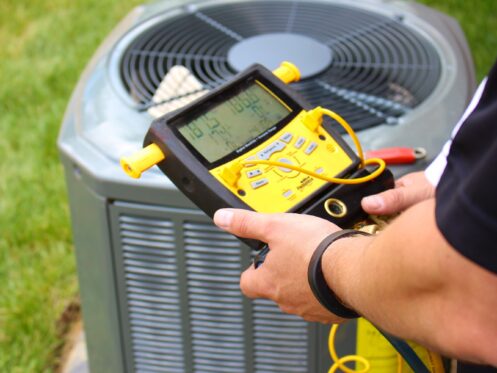
Aging HVAC systems often lose about 5% to 10% of their efficiency per year if they go without heating and air conditioning maintenance. Our technicians perform tune-ups to verify that system components are still talking to each other properly. We also can meter the vents’ airflow and confirm that the air returns are working. An annual checkup provides a good opportunity to lubricate your HVAC unit’s moving parts, too. We also clean burners and coils to ensure that heating and cooling systems are operating as efficiently as possible. Similarly, we inspect refrigerant levels to make sure your air conditioner will deliver maximum cooling.
Even a small maintenance task like replacing air filters makes a difference in providing airflow. This reduces strain on your HVAC system, potentially extending your system’s service life.
Today’s smart technologies also enhance maintenance. Smart HVACs can track and report lots of details. They can note when the last maintenance date was. Likewise, they offer data about how many times the system has run since it was last serviced. You can even find systems that track details like how long the system runs per cycle. This information offers clues about whether unscheduled maintenance may be necessary.
Upgrades
Homeowners should think about upgrades that often pay for themselves quickly. The standard efficiency rating for an AC unit is its Seasonal Energy Efficiency Ratio 2 (SEER2) rating. A Texas home’s AC should have a SEER2 rating of at least 16.2. Upgrading to a SEER2 rating of 18 can yield an almost 30% improvement in efficiency. Modern AC replacement options go well above a SEER2 of 20, but a rating of 16.2 to 18 should be plenty for residential use.
Heat-recovery ventilation is another modern upgrade that’s worthwhile. HRV systems collect heat from your HVAC’s ventilation system, often capturing at least 70% that would otherwise be lost.
Simple upgrades also matter. Even adding a handful of ceiling fans to your living room can create a more comfortable environment. Correctly configured, ceiling fans can draw hot air upward in the summer and push it downward in the winter.
HVAC Zones
Today’s smart technologies make zoning a home’s HVAC easier than ever before. Suppose you have a guest bedroom. It might only get a few days of use every year. You can set up vents and dampers that control the airflow into the room. Even better, smart systems now can automatically control those components. The zone will operate with less heating and cooling most of the time, but it can provide normal comfort levels when you have a guest. Similar solutions are great for craft and shop areas, game rooms, children’s play spaces and home theaters.
HVAC zones also allow you to balance the distribution of heating and cooling. If your home has a distant part of the upstairs that’s always drafty in the winter, you can use zoning to ensure it gets more airflow and heat.
Zones provide better sensor coverage, too. Many zonal HVACs include multiple smart thermostats. These allow you to get readings for several areas, providing a clearer picture of what the conditions are throughout your house. Especially with advances in thermostat AI technology, it is easy to ensure that every zone is set to a comfortable level.
Affordable Air is proud to serve Garland, TX and the Dallas–Fort Worth Metroplex. Our HVAC technicians assist commercial and residential customers. We install, repair and maintain heating and cooling systems. You also can ask us about ductwork, insulation and indoor air quality. Customers can request 24/7 emergency service, too.
Our family business has been around for more than 20 years. We offer excellent rates and quick response times. Our customers have left amazing reviews for us online, too. Our technicians work on systems from trusted brands, such as Trane, Lennox and Carrier. Financing is also available for installations with approved credit.
If you’re ready to improve the HVAC efficiency of your Garland residence, call Affordable Air today.